
Brunswick Juvenile Release Paths
The Brunswick County Juvenile Detention Center holds juveniles under juvenile-court authority. It is not an adult county jail, an NCDAC prison, or a public release-feed source. A juvenile can leave detention only through the authorized process to a parent or guardian, another placement, or a different destination approved by the juvenile court. The court order and the facility's authorized communication, not an adult roster, establish that movement.
Words matter here. A release to a guardian is different from a move to another placement. Both may end custody at the Brunswick County Juvenile Detention Center, but only the authorized record can explain where legal responsibility continues. Public copy should never turn a facility departure into a claim that all court oversight has ended.
| Possible route | What can confirm it |
|---|---|
| Release to parent or guardian | Authorized facility communication and juvenile-court order |
| Move to another placement | Court-authorized placement information available to a qualified requester |
| Continued detention elsewhere | Originating and receiving juvenile authorities |
| Unknown status | Facility and juvenile-court contact, not an adult inmate search |
Confirm Brunswick Juvenile Releases
A parent, guardian, counsel, or authorized person should begin with the Brunswick County Juvenile Detention Center. Provide the young person's name and the requester's relationship or authority. Staff may need to verify identity before discussing a case. If the facility directs the requester to the court, use the Brunswick County court contact directory to reach the correct local office.
- Call the juvenile center and state the relationship to the juvenile.
- Ask whether staff can confirm the current authorized release or placement route.
- Follow identity, guardianship, or counsel-verification requirements given by the office.
- Contact the juvenile court when the release depends on an order or placement decision.
- Do not publish or enter the juvenile's name in adult release and mugshot channels.
The adult Sheriff's Released Inmates portal is not a juvenile-release list. A missing juvenile name there is expected and says nothing about the juvenile case.
Neither the adult Brunswick inmate portal nor the NCDAC adult Public Offender Search should be used to infer a juvenile's status. Those systems serve different populations and disclosure rules. VINELink also does not override juvenile confidentiality or create public access to a protected case.
Brunswick Juvenile Release Records
Juvenile records follow separate confidentiality rules. The adult public-record process does not make a juvenile's name, photograph, placement, medical information, or full case file open to everyone. Access depends on the requester's lawful role and the type of record. A qualified requester should ask the facility or juvenile court what proof of authority is required and which office controls the requested item.
The Sheriff's general record-request form includes Detention requests for adult jail material, but it is not proof that a juvenile record is public. If a request touches the juvenile center, describe the record without adding more personal data than necessary and expect the office to route, limit, or deny disclosure under the applicable juvenile rules. Ask for the legal basis and the proper custodian if access cannot be given.
- Authorized person
- A parent, guardian, counsel, or other person whose legal role permits communication about the case.
- Placement
- A court-approved destination or program. It is not automatically the same as unrestricted community release.
- Confidential record
- Information that is not available through the public adult jail and offender-search systems.
- Custodian
- The government office responsible for holding and responding for a particular record.
Brunswick Juvenile Release Contacts
The state juvenile detention-center list identifies the Brunswick facility, while Brunswick sources place it with the county detention complex. The main facility number is available at all hours for detention operations; a separate state directory number is also listed for the juvenile center. Calling does not guarantee disclosure. Staff can explain the correct authorized route and the proof needed.
70 Stamp Act Drive
Bolivia, NC 28422
Main facility: 910-253-2760
Juvenile-center contact: 910-253-2771
For court routing, the Brunswick County Courthouse is at 310 Government Center Drive NE, Unit 1, Bolivia, NC 28422. The Clerk of Superior Court line is 910-253-3900, and regular clerk hours are Monday through Friday, 8:30 a.m. to 5 p.m. The official Brunswick County court page should be checked for current operations before a visit.
Brunswick Juvenile Release Facility
The facility is a county-operated, 12-bed juvenile detention center. The state juvenile-justice history says it opened in 2020. Capacity describes the building and does not establish current occupancy, release volume, or whether a named juvenile is present. Those facts cannot be inferred from the number of beds.
The North Carolina juvenile detention center list provides the appropriate statewide context for this type of custody. It keeps the facility separate from adult local confinement and adult state prison. That distinction controls which contacts, search systems, and disclosure rules apply.
The official state juvenile facility list can be viewed directly before contacting the local center.
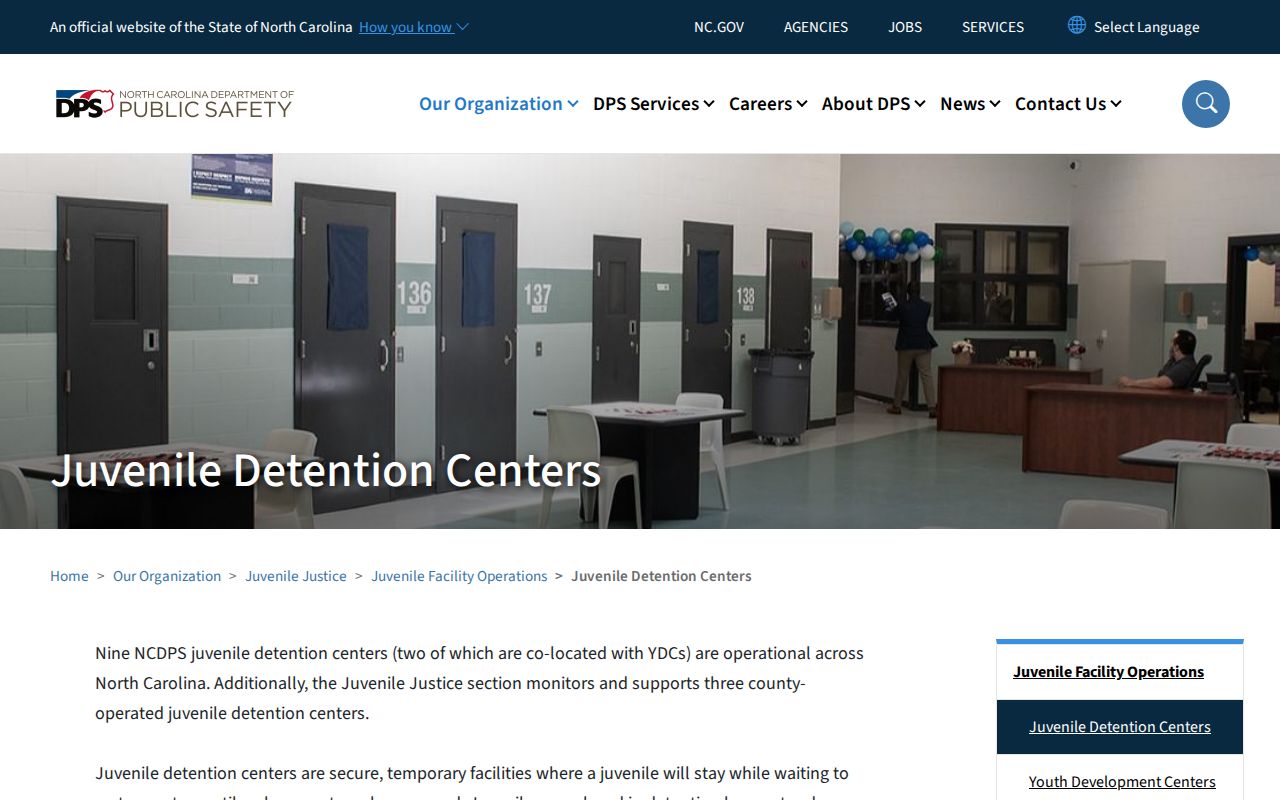
The 2020 opening date is facility history, not a statement about any individual case. Likewise, the 12-bed figure cannot be used to estimate how long a juvenile stays, when a release will happen, or whether space is available. Those decisions depend on the authorized juvenile process. A public-facing facility description supplies context while leaving case facts to the court and staff who are permitted to address them.
Because the adult and juvenile buildings share the same street address and main facility line, a caller should say “Juvenile Detention Center” at the start of the call. That avoids routing an authorized juvenile question into the adult Detention records path. The state-listed juvenile number offers a second contact when the main switchboard directs the caller there.
Brunswick Adult and Juvenile Releases
The neighboring adult detention center uses a public current-custody portal and a Released Inmates view limited to the previous 24 hours. The juvenile center does not belong in that feed. An adult transfer to NCDAC can be followed in the state offender search, but a juvenile placement cannot be traced by substituting the adult state prison database.
| Question | Adult county jail | Juvenile detention |
|---|---|---|
| Public recent-release feed | Official 24-hour view exists | Do not use the adult feed |
| Primary confirmation | Sheriff release sheet | Authorized facility and court process |
| State search after transfer | NCDAC may apply | Adult NCDAC search is not the route |
| Photo access | May be requested subject to law | Do not publish through adult mugshot paths |
This boundary protects both accuracy and privacy. It also prevents a public search failure from being reported as a confirmed release. When the case involves a juvenile, stop using the adult path and speak with the office that has authority to communicate.
Unknown Brunswick Juvenile Release Status
Do not fill a gap with assumptions. A person may have moved to a guardian, another placement, or another authorized setting, but only the responsible office can say which. Note the date and number called, follow the identity process, and keep any reply within the limits set by the facility or court.
The Brunswick County released-inmate search explains adult county, state, federal, and immigration routes. Those links help only after confirming that the person belongs in an adult system. For a juvenile matter, the local facility and juvenile court remain the proper starting points.
A caller should also separate a request for status from a request for documents. Facility staff may be able to explain an authorized communication process without releasing a file. Court staff may identify the correct filing office without discussing protected facts. Clear, narrow questions help each office apply the juvenile rules to the requester's actual role.
Preserve any written court direction supplied to the family or counsel. If information from a public adult system conflicts with an authorized juvenile source, do not merge the records. Return to the juvenile facility or court, give the date of the conflicting item, and ask the responsible office to clarify the proper case route. Keep that reply with the court direction so later questions return to the same authorized source and do not drift into public adult databases.