
Brunswick Projected and Actual Release
A projected release date is the current agency calculation. It is built from the judgment, sentence start, prior-confinement credit, minimum and maximum terms, earned-time record, post-release-supervision rules, and any later lawful changes. An actual release date records the completed event. It shows when the person left the named custody. The two dates can match, but they serve different purposes.
Pretrial detention works differently. A person held at Brunswick County Detention Center before judgment has no sentence-based release date. Bond, dismissal, a court order, transfer, or monitored pretrial release can change custody. The Sheriff’s release record documents the physical exit. The court file documents the legal order. A roster row disappearing is not enough to establish either event.
Find Brunswick Projected Release Dates
Begin with the custody system. State prisoners and people under North Carolina community supervision are found through the NCDAC Public Offender Search. The Brunswick County jail is not part of that database. A short local jail term should be traced through the Brunswick judgment and the jail’s current calculation. Federal sentences use the BOP locator, not the county or NCDAC form.
- Identify whether the person is in Brunswick County jail, NCDAC prison, federal custody, or pretrial custody.
- For NCDAC, search by the seven-digit offender number when available. Otherwise match name, birth date, conviction county, and sentence dates.
- Open the full record and read Projected Release Date, sentence history, incarceration status, and any supervision entries.
- Compare the result with the judgment, minimum and maximum terms, jail credit, and whether sentences run together or one after another.
- For a Brunswick local sentence, obtain the court judgment and ask Detention for the custodian’s current calculated release date.
- Save the date checked. Recheck the official record after discipline, a new judgment, an appeal, or another reported change.
- After release occurs, request the actual release event and destination rather than relying on the old forecast.
The NCDAC form should remain set to All when researching a person who may have left prison. Active Inmate can filter out inactive incarceration or active community supervision. The Brunswick County search and release-record path covers a county-only custody episode that never entered NCDAC.
The NCDAC Offender Release Search is a separate released-first channel. It can search by release county and month or by surname. Its result includes offender number, name, release date, primary offense, and release type. Release county is not the same as county of conviction.
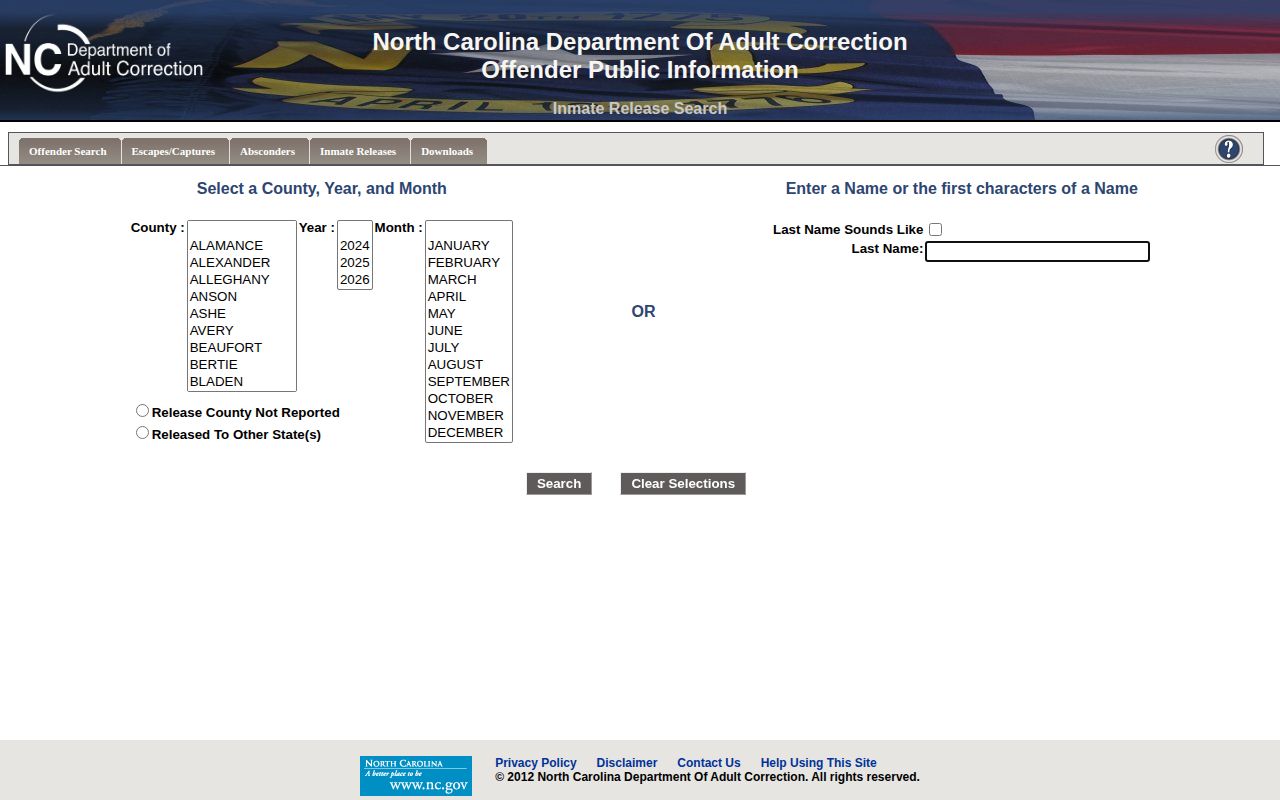
The monthly state search complements the full offender record, but it is not the Brunswick jail’s recent-release feed.
Brunswick NCDAC Release Date Fields
The full state detail may show Inmate Status, Probation/Parole/Post Release Status, Incarceration Status, total term, conviction date, Projected Release Date, admission, location, and sentence history. Sentence blocks may add Actual Release Date, minimum, maximum, commitment type, offense date, county of conviction, parole begin and end, docket, and service status. Those fields form a timeline, not one interchangeable date.
| Record date or status | How to read it |
|---|---|
| Projected Release Date | NCDAC’s current sentence calculation; it may change |
| Actual Release Date | The completed exit from the listed incarceration event |
| POST RELEASE/PAROLE | Release from prison with community supervision still active |
| Maximum term or release | A sentence endpoint that must be read with credits and supervision rules |
| Next custody review | A review marker, not automatically a parole hearing or release date |
| EXPIRED or discharge | A later completed sentence or supervision milestone |
NCDAC Victim Support Services warns readers not to treat a next custody review as a parole date. A supervision start marks leaving prison, not final sentence discharge. Save the field label along with the date. Copying only the number can erase the event’s meaning.
The NCDAC Victim Support Services page is the official source for projected-release and release-notification context.
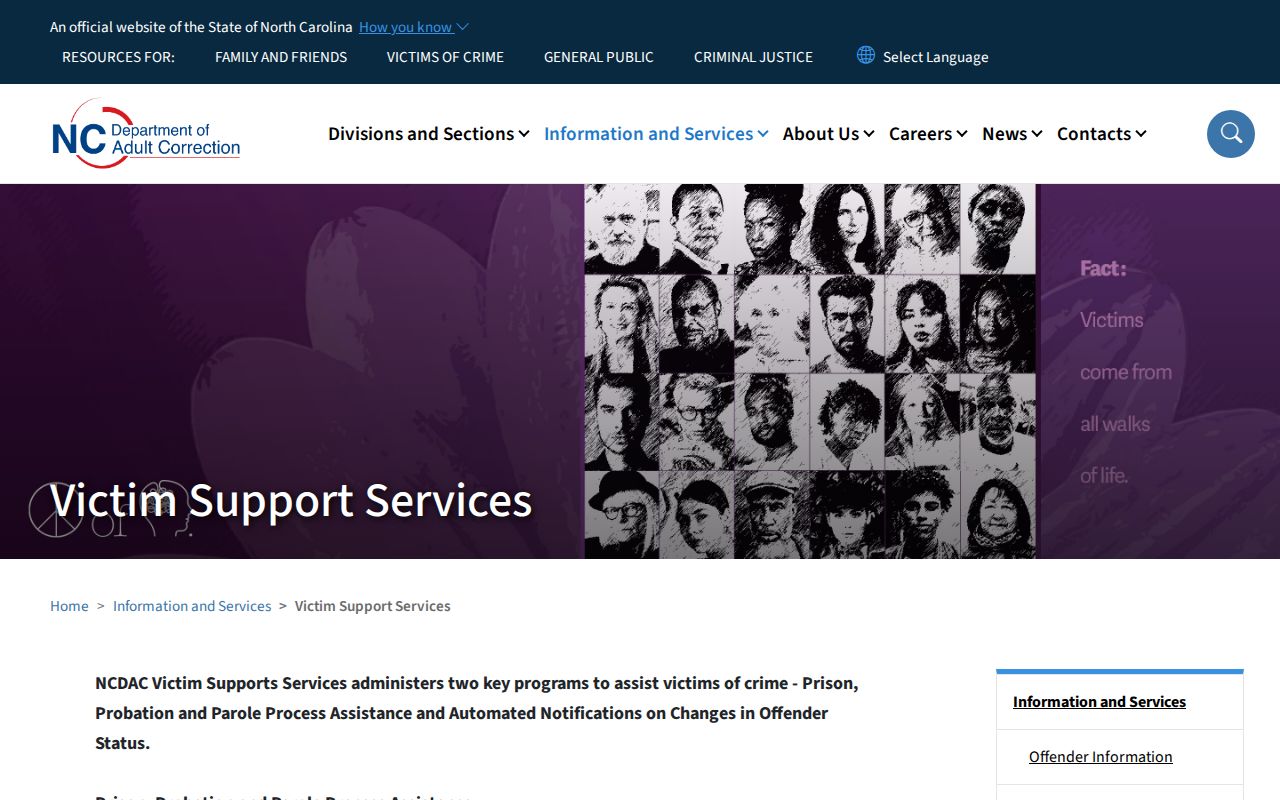
The warning is especially useful when a record displays both a custody review and a projected release field.
Brunswick Structured Sentencing Release
North Carolina Structured Sentencing generally governs qualifying offenses on or after October 1, 1994. G.S. 15A-1340.13(d) supplies the central rule for active felony punishment: the prisoner must serve the judicially imposed minimum. Earned time may reduce the maximum, but not below the minimum. The maximum includes the state’s post-release-supervision structure, so a quick percentage of the displayed maximum can mislead.
NCDAC’s parole explanation says Structured Sentencing requires at least 100 percent of the minimum and 85 percent of the maximum. That is not a promise that anyone can multiply a sentence by .85 and find the release day. The offense class, minimum and maximum, sentence grid, supervision interval, credits, and later events all matter. Only NCDAC’s current calculation resolves those inputs for a state prisoner.
The General Assembly statute page displays the controlling minimum-and-earned-time rule.
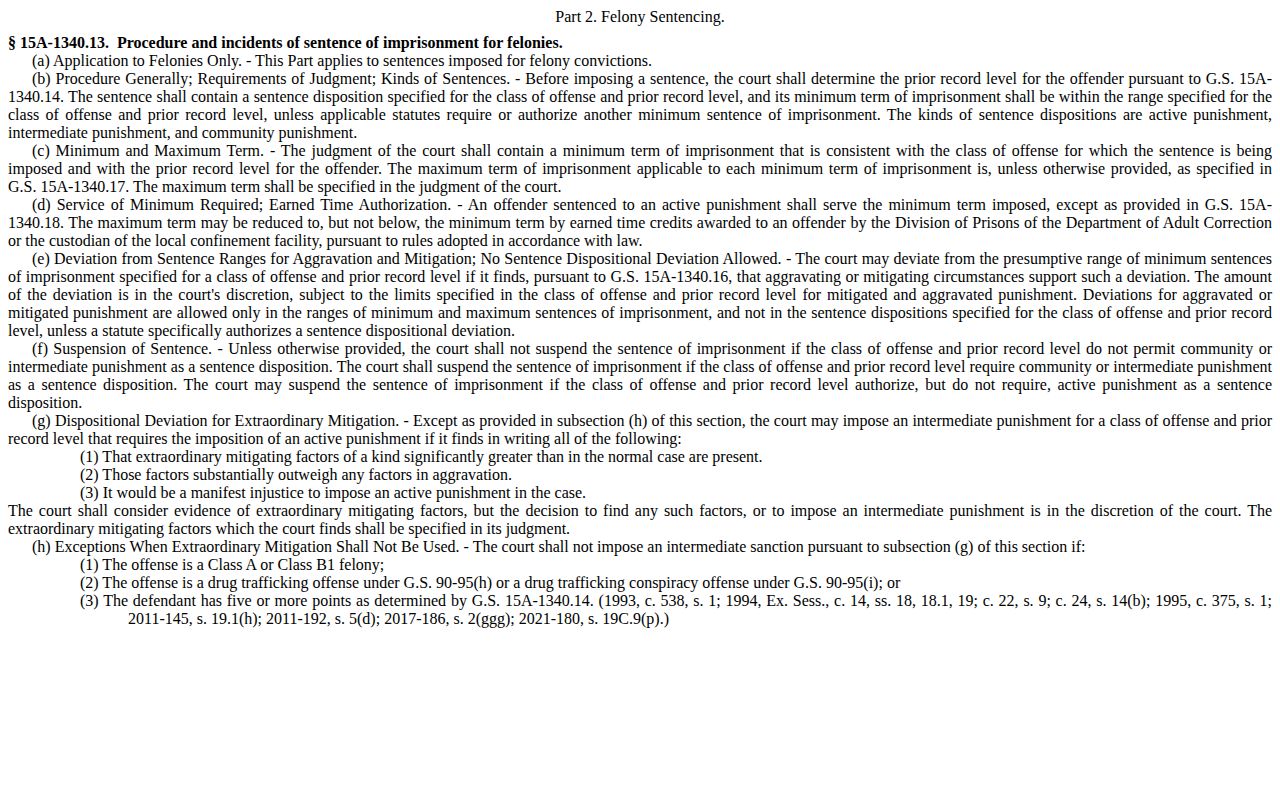
It supports a records-based calculation, not a universal release-date shortcut.
Brunswick Earned-Time Release Credits
NCDAC distinguishes several credit regimes. Under Structured Sentencing, a state prisoner assigned to work or a full-time program can earn credit that reduces the maximum toward the minimum. It cannot cut below the minimum. Older Fair Sentencing generally applies to offenses from July 1, 1981 through September 30, 1994. In that regime, gain time can follow work or program participation, and good time can accrue for good behavior, subject to loss after discipline. Merit time can apply in either regime for qualifying demanding work or other authorized circumstances.
Offense date controls the system. That is why two people with terms that look alike may have different calculations. Credit can also be lost, restored, or corrected. Never promise a date from the sentence length alone. The official record must be read with the judgment and current credit history.
- Earned time
- Authorized credit that can reduce a maximum term toward, but not below, the required minimum.
- Jail credit
- Credit for eligible prior confinement applied to the sentence calculation.
- Concurrent terms
- Sentences served at the same time.
- Consecutive terms
- Sentences served one after another.
- Detainer
- A request or legal basis for another authority to take or keep custody.
Brunswick Jail Release Date Rules
No public Brunswick-specific formula or fixed weekend-release policy was located. The county custodian may award credits authorized by law, but a public reader cannot know whether a particular person earned the maximum. Obtain the Brunswick judgment, identify prior-confinement credit and sentence structure, then ask the Detention Center for its current calculation. Confirm the actual release event after it occurs.
North Carolina does provide a statewide local-misdemeanant rule. G.S. 15A-1340.20(d) permits earned time under applicable rules, while G.S. 162-60 provides four days off each 30 days for faithful assigned work or qualifying education, rehabilitation, or training. Combined reductions are capped at four days per month. Escape or attempted escape forfeits that statutory reduction.
That rule does not prove that a Brunswick detainee received four days. The custodian judges faithful participation. Nor did the research find authority for automatic Friday release when an expiration falls on a weekend or holiday. Call Detention at 910-253-2760 to verify timing instead of borrowing a rule from another state or from court filing deadlines.
Brunswick Post-Release Date Calculation
G.S. 15A-1368.2 explains the move from prison into post-release supervision. In ordinary terms, the prison-release point reflects the maximum less the statutory supervision interval and applicable earned time. The statute uses a 12-month interval for Class B1 through E and nine months for F through I, with special rules that include five-year supervision for reportable registry offenses. Supervision earned time may reduce the supervision term by no more than 20 percent of its original length.
Leaving prison at that point is release from incarceration. Completion of supervision later terminates the sentence. Those milestones can appear as separate state-record entries. Parole has a different legal basis and mainly applies to older or specially eligible sentences. A modern Structured Sentencing release into required post-release supervision is not a discretionary parole grant.
The post-release supervision statute supplies the state prison-to-supervision calculation shown here.
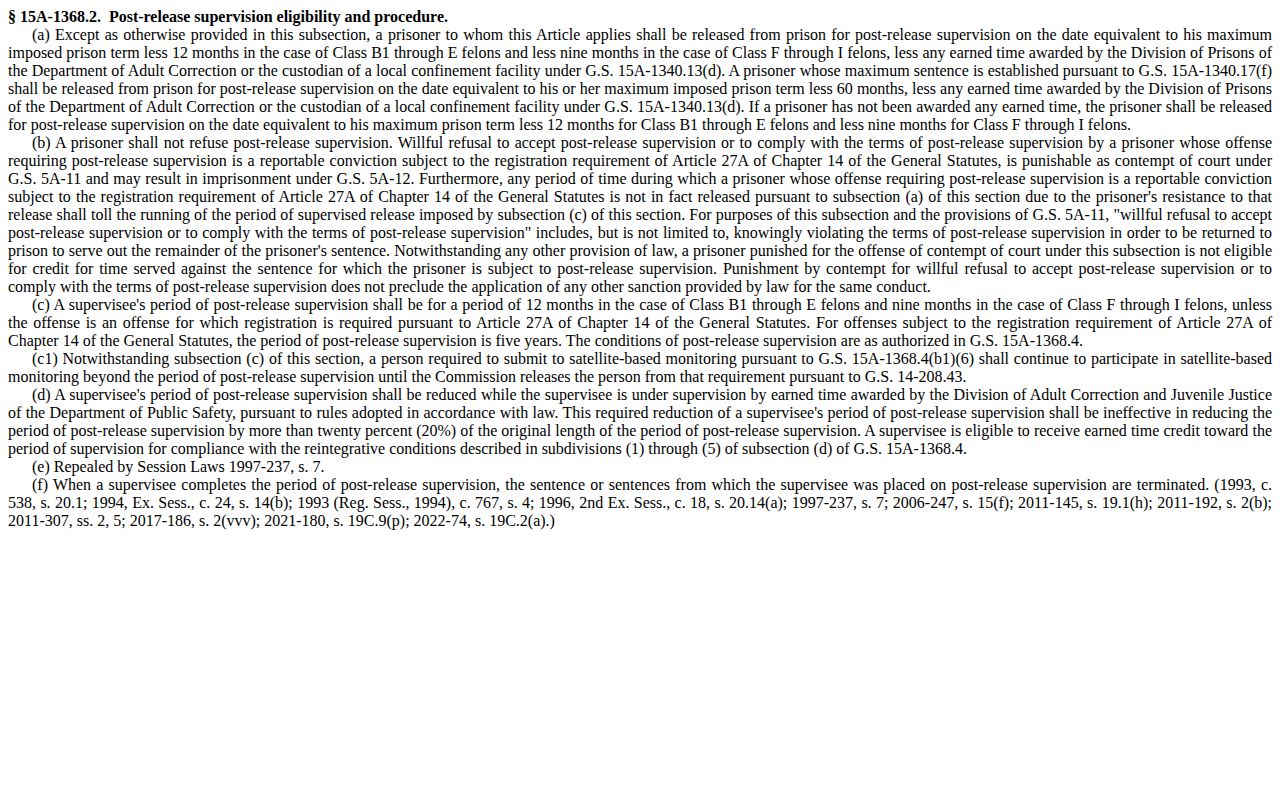
The source clarifies why prison release can occur before the full sentence is discharged.
Why Brunswick Release Dates Change
A projected date can move after the first lookup. Some changes affect credit. Others change the sentence itself or add a new custody obligation. Compare the saved record with the new one and identify which agency made the change. NCDAC controls a state sentence calculation. Brunswick County cannot alter that state record, while NCDAC cannot rewrite the Brunswick court judgment.
| Change | Possible effect | Source to check |
|---|---|---|
| Jail-credit correction | Moves the sentence calculation after prior custody is corrected | Judgment and NCDAC calculation |
| Credit loss or restoration | Moves the projected state or local release point | Responsible custodian |
| New sentence | Adds time or changes the combined structure | Court judgment and sentence history |
| Concurrent or consecutive clarification | Changes whether terms overlap or follow one another | Court order and NCDAC record |
| Appeal or later court relief | Changes or removes a controlling judgment | Brunswick Clerk and agency record |
| Detainer or receiving agency | Can turn a county exit into continued custody elsewhere | Release destination and receiving custodian |
A parole review can matter only when the sentence is actually parole eligible. A custody review date does not itself grant parole. Save the page or note the date checked, then recheck the official record after a reported decision.
Confirm Brunswick Inmate Release Dates
Confirmation follows the source. For a state prisoner, compare Projected Release Date with the later Actual Release Date and current incarceration status. For a Brunswick jail sentence, ask the Sheriff for the physical release date, time, type, and destination. For a pretrial person, use the court order and jail event. If the record says transfer, continue with the receiving agency.
NC SAVAN can provide a future custody-change alert for Brunswick jail or NCDAC events. Registration and status interpretation are covered in the Brunswick VINELink Release Check. The alert is useful for timing, but the jail release sheet or NCDAC sentence history remains the durable record.
Ask a precise question when calling: “Is this the current calculated release date, or has an actual release event occurred?” That wording keeps a forecast separate from a completed exit. It also gives staff a clear record field to confirm.
Note: A projected date should always be saved with its source and check date, then replaced with the actual release event once available.